
The Kind of Dental Care
That Truly Sets Us Apart
At Noble Dental Clinic, your comfort and confidence come first. We combine advanced dental technology with a gentle, personalized approach to make every visit stress-free. From preventive care to specialized treatments, our friendly team takes the time to understand your needs and provide solutions that fit your lifestyle. With a focus on compassion, trust, and lasting results, we’re here to keep your smile healthy, bright, and truly cared for.

Tooth Fillings / Restorations
Tooth fillings are used to restore teeth that have been damaged by decay (cavities) or minor fractures. The decayed portion of the tooth is removed and replaced with a tooth-coloured material (usually composite resin or GIC) to restore its shape, function, and strength
Why is it Done
To stop tooth decay from spreading, protect the inner layers of the tooth, and prevent pain or further damage.
Why is it Done
It’s a simple, quick procedure done under local anaesthesia. The filling blends in naturally with your tooth, and you can eat normally soon after.
Ultrasonic Scaling and Polishing
This professional dental cleaning removes plaque, tartar (calculus), and stains from your teeth using ultrasonic vibrations, followed by polishing for a smooth, clean finish.
Why is it Done
To stop tooth decay from spreading, protect the inner layers of the tooth, and prevent pain or further damage.
Why is it Done
It’s a simple, quick procedure done under local anaesthesia. The filling blends in naturally with your tooth, and you can eat normally soon after.
Tooth Capping / Crowning of Teeth
A crown, also known as a cap, is a protective covering placed over a damaged, weak, or heavily restored tooth to strengthen it and restore its shape and function.
Why is it Done
To stop tooth decay from spreading, protect the inner layers of the tooth, and prevent pain or further damage.
Why is it Done
It’s a simple, quick procedure done under local anaesthesia. The filling blends in naturally with your tooth, and you can eat normally soon after.
Tooth Capping / Crowning of Teeth
A crown, also known as a cap, is a protective covering placed over a damaged, weak, or heavily restored tooth to strengthen it and restore its shape and function.
Why is it Done
To stop tooth decay from spreading, protect the inner layers of the tooth, and prevent pain or further damage.
Why is it Done
It’s a simple, quick procedure done under local anaesthesia. The filling blends in naturally with your tooth, and you can eat normally soon after.
Tooth Capping / Crowning of Teeth
A crown, also known as a cap, is a protective covering placed over a damaged, weak, or heavily restored tooth to strengthen it and restore its shape and function.
Why is it Done
To stop tooth decay from spreading, protect the inner layers of the tooth, and prevent pain or further damage.
Why is it Done
It’s a simple, quick procedure done under local anaesthesia. The filling blends in naturally with your tooth, and you can eat normally soon after.
Tooth Capping / Crowning of Teeth
A crown, also known as a cap, is a protective covering placed over a damaged, weak, or heavily restored tooth to strengthen it and restore its shape and function.
Why is it Done
To stop tooth decay from spreading, protect the inner layers of the tooth, and prevent pain or further damage.
Why is it Done
It’s a simple, quick procedure done under local anaesthesia. The filling blends in naturally with your tooth, and you can eat normally soon after.
Tooth Capping / Crowning of Teeth
A crown, also known as a cap, is a protective covering placed over a damaged, weak, or heavily restored tooth to strengthen it and restore its shape and function.
Why is it Done
To stop tooth decay from spreading, protect the inner layers of the tooth, and prevent pain or further damage.
Why is it Done
It’s a simple, quick procedure done under local anaesthesia. The filling blends in naturally with your tooth, and you can eat normally soon after.
Tooth Capping / Crowning of Teeth
A crown, also known as a cap, is a protective covering placed over a damaged, weak, or heavily restored tooth to strengthen it and restore its shape and function.
Why is it Done
To stop tooth decay from spreading, protect the inner layers of the tooth, and prevent pain or further damage.
Why is it Done
It’s a simple, quick procedure done under local anaesthesia. The filling blends in naturally with your tooth, and you can eat normally soon after.
Tooth Capping / Crowning of Teeth
A crown, also known as a cap, is a protective covering placed over a damaged, weak, or heavily restored tooth to strengthen it and restore its shape and function.
Why is it Done
To stop tooth decay from spreading, protect the inner layers of the tooth, and prevent pain or further damage.
Why is it Done
It’s a simple, quick procedure done under local anaesthesia. The filling blends in naturally with your tooth, and you can eat normally soon after.
Tooth Capping / Crowning of Teeth
A crown, also known as a cap, is a protective covering placed over a damaged, weak, or heavily restored tooth to strengthen it and restore its shape and function.
Why is it Done
To stop tooth decay from spreading, protect the inner layers of the tooth, and prevent pain or further damage.
Why is it Done
It’s a simple, quick procedure done under local anaesthesia. The filling blends in naturally with your tooth, and you can eat normally soon after.
Tooth Capping / Crowning of Teeth
A crown, also known as a cap, is a protective covering placed over a damaged, weak, or heavily restored tooth to strengthen it and restore its shape and function.
Why is it Done
To stop tooth decay from spreading, protect the inner layers of the tooth, and prevent pain or further damage.
Why is it Done
It’s a simple, quick procedure done under local anaesthesia. The filling blends in naturally with your tooth, and you can eat normally soon after.
Tooth Capping / Crowning of Teeth
A crown, also known as a cap, is a protective covering placed over a damaged, weak, or heavily restored tooth to strengthen it and restore its shape and function.
Why is it Done
To stop tooth decay from spreading, protect the inner layers of the tooth, and prevent pain or further damage.
Why is it Done
It’s a simple, quick procedure done under local anaesthesia. The filling blends in naturally with your tooth, and you can eat normally soon after.
Tooth Capping / Crowning of Teeth
A crown, also known as a cap, is a protective covering placed over a damaged, weak, or heavily restored tooth to strengthen it and restore its shape and function.
Why is it Done
To stop tooth decay from spreading, protect the inner layers of the tooth, and prevent pain or further damage.
Why is it Done
It’s a simple, quick procedure done under local anaesthesia. The filling blends in naturally with your tooth, and you can eat normally soon after.
Tooth Capping / Crowning of Teeth
A crown, also known as a cap, is a protective covering placed over a damaged, weak, or heavily restored tooth to strengthen it and restore its shape and function.
Why is it Done
To stop tooth decay from spreading, protect the inner layers of the tooth, and prevent pain or further damage.
Why is it Done
It’s a simple, quick procedure done under local anaesthesia. The filling blends in naturally with your tooth, and you can eat normally soon after.
Tooth Capping / Crowning of Teeth
A crown, also known as a cap, is a protective covering placed over a damaged, weak, or heavily restored tooth to strengthen it and restore its shape and function.
Why is it Done
To stop tooth decay from spreading, protect the inner layers of the tooth, and prevent pain or further damage.
Why is it Done
It’s a simple, quick procedure done under local anaesthesia. The filling blends in naturally with your tooth, and you can eat normally soon after.
Comprehensive Care Backed by
Global Standards

Tooth Fillings / Restorations
Tooth fillings are used to restore teeth that have been damaged by decay (cavities) or minor fractures. The decayed portion of the tooth is removed and replaced with a tooth-coloured material (usually composite resin or GIC) to restore its shape, function, and strength.
To stop tooth decay from spreading, protect the inner layers of the tooth, and prevent pain or further damage.
Why is it Done:
What to expect:
What to expect:
It’s a simple, quick procedure done under local anaesthesia. The filling blends in naturally with your tooth, and you can eat normally soon after.

Ultrasonic Scaling & Polishing
This professional dental cleaning removes plaque, tartar (calculus), and stains from your teeth using ultrasonic vibrations, followed by polishing for a smooth, clean finish.
To maintain healthy gums, prevent gum disease, and keep your teeth looking clean and fresh.
Why is it Done
What to expect:
What to expect:
It’s usually painless and takes about 30–45 minutes. You may feel some vibration and cool water spray. Most patients are advised to get a cleaning every 6 months.

Tooth Capping / Crowning
A crown, also known as a cap, is a protective covering placed over a damaged, weak, or heavily restored tooth to strengthen it and restore its shape and function.
To protect teeth that have undergone root canal treatment, have large fillings, are cracked, or are badly worn down.
Why is it Done
What to expect:
What to expect:
It usually takes 2 visits. On the first visit, the tooth is prepared and scanned or recorded with an impression; a custom crown is then placed in the second visit.

Root Canal Treatment (RCT)
Root canal treatment is done to save a tooth that’s badly decayed or infected. It involves removing the infected pulp (nerve), cleaning the root canals, and sealing the space.
To relieve pain, eliminate infection, and preserve your natural tooth — avoiding an extraction.
Why is it Done
What to expect:
What to expect:
Modern root canals are painless thanks to local anaesthesia. It may take 1–2 appointments. After the procedure, a crown is often recommended to protect the tooth.

Tooth Extraction
Tooth extraction is the removal of a tooth from its socket, often done when the tooth is severely decayed, damaged, or impacted (like wisdom teeth), or mobile (moving/loose).
When a tooth cannot be saved by other treatments like fillings or root canals, or when it's causing crowding or infection.
Why is it Done
What to expect:
What to expect:
Extractions are done under local anaesthesia. Recovery is usually smooth, with proper post-op care. In complex cases, surgical extraction may be required.

Teeth Whitening / Bleaching
A cosmetic procedure to brighten and whiten teeth by removing stains and discoloration using safe whitening agents.
To improve the appearance of your smile by lightening stained or dull teeth.
Why is it Done
What to expect:
What to expect:
Available as in-office treatment where the dentist applies the whitening agent in a single or multiple visits to achieve the shade desired by you. Results are quick and noticeable, with minimal sensitivity in most cases.
.jpg)
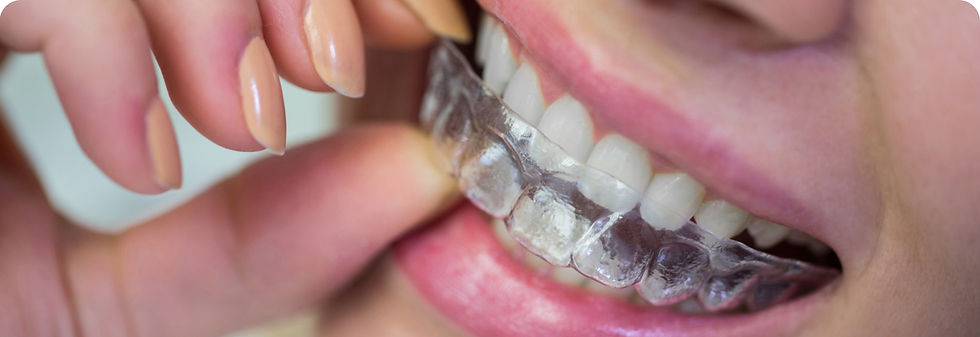
Clear Aligners / Braces
Braces or clear aligners are used to straighten misaligned or crooked teeth, correct bite issues, and improve jaw alignment.
To enhance appearance, improve oral hygiene, and prevent issues like crowding, bite problems, or jaw pain.
Why is it Done
What to expect:
What to expect:
Braces involve brackets and wires; aligners are removable, clear trays. Treatment time varies from 6 months to 2+ years, depending on the case. This may be followed by use of retainers to maintain the new bite.
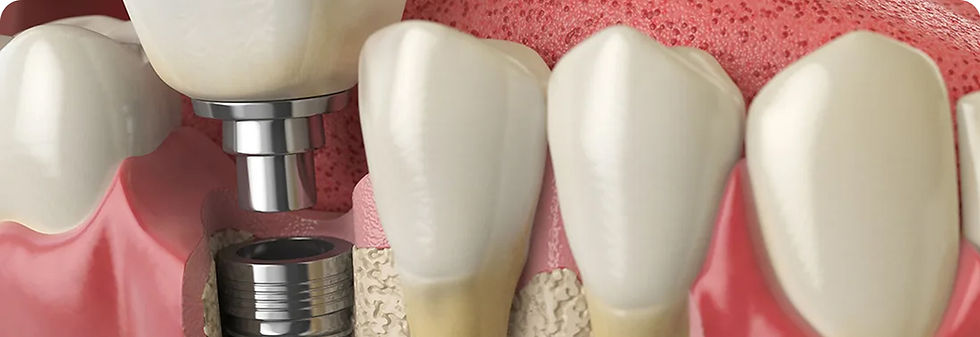
Dental Implants
Dental implants are artificial tooth roots made of titanium that are placed in the jawbone to support crowns, bridges, or dentures.
To replace missing teeth permanently, restore function, and preserve jawbone health.
Why is it Done
What to expect:
What to expect:
In the first stage, the implant is placed into the bone. This is followed by a waiting period of 2 to 3 months, after which the Second stage starts and the placement of the crown takes place.

Dentures (Full or Partial)
Dentures are removable replacements for missing teeth — either a full set (for all missing teeth) or partial (when some natural teeth remain).
To restore chewing ability, speech, and facial aesthetics after tooth loss.
Why is it Done
What to expect:
What to expect:
An acrylic replacement to natural teeth. It may take some time to adjust and may require regular visits to the dentist for minor adjustments. It is recommended that the patient maintains them on a daily basis.

Full-Mouth Rehabilitation
A comprehensive treatment plan that restores function, aesthetics, and health to the entire mouth using a combination of procedures like crowns, bridges, implants, and more.
For patients with multiple damaged, missing, or worn teeth — due to trauma, decay, bite problems, or aging.
Why is it Done
What to expect:
What to expect:
Treatment is customized and done in phases. It may take multiple visits, but it can completely transform a patient's smile, bite, and quality of life.
.jpg)
Pediatric Dentistry
Dental care tailored for infants, children, and teens — focusing on prevention, growth monitoring, and early treatment of dental issues.
Early dental visits help prevent cavities, build good oral habits, and ensure proper development of teeth and jaws.
Why is it Done
What to expect:
What to expect:
Child-friendly environment, gentle treatments, and education for both kids and parents. Services include Pulpectomy, Preventive sealants, fillings, and space maintainers.

Veneers
Veneers are thin, custom-made shells placed on the front surface of teeth to improve their appearance.
To correct discolored, chipped, uneven, or slightly misaligned teeth — providing a dramatic smile makeover.
Why is it Done
What to expect:
What to expect:
Usually takes 2–3 visits. The process involves minimal tooth preparation. Veneers are strong, stain-resistant, and can last many years with proper care.

Gum Surgery (Periodontal)
Gum surgery refers to a range of procedures used to treat advanced gum disease (periodontitis), correct gum recession, or improve the appearance and health of the gums.
To stop gum infection, reduce deep pockets around teeth, regenerate lost bone or tissue, and prevent tooth loss. It may also be done for cosmetic reasons — like reshaping uneven gum lines.
Why is it Done
What to expect:
What to expect:
Performed under local anesthesia, gum surgery can involve lifting the gums to clean beneath, removing infected tissue, or grafting healthy gum tissue. Mild discomfort and swelling are normal for a few days post-surgery.

Night Guards / Mouth Guards
A night guard is a custom-fitted oral appliance worn while sleeping to protect teeth from grinding or clenching (a condition called bruxism). Mouth guards are also used in sports to protect against injuries.
To prevent tooth wear, fractures, jaw pain, and headaches caused by night-time grinding or sports injuries.
Why is it Done
What to expect:
What to expect:
Night guards are custom-made for comfort and effectiveness. They’re easy to wear, durable, and can significantly reduce damage to teeth and stress on the jaw muscles.

Dental Splints
A dental splint is a custom-made appliance used to stabilize the teeth or jaw. It can be worn over the teeth to reduce stress, protect them, or support healing. Splints are commonly used in cases of TMJ disorders, bruxism (teeth grinding), tooth mobility, or after dental trauma.
To relieve jaw joint (TMJ) pain or clicking, To prevent tooth wear from grinding/clenching, To stabilize loose teeth due to gum disease, To protect teeth after injury or surgery.
Why is it Done
What to expect:
What to expect:
Dental splints are comfortable, removable, and custom-fitted to your bite. They’re typically worn at night, but usage depends on your condition. With regular use and follow-up, splints can significantly reduce discomfort and prevent further dental damage.


Follow us on social media
© 2025 Noble dentistry Pvt Ltd
About us
Services
Clinic
Contact